One of the key takeaways from the most recent round of quarterly earnings reports from the AI boom companies was the increased projection on future capex spending. Viewpoints certainly differed across the analyst spectrum on whether this increased spending guidance could be seen as bullish given the increased demand, while others were more skeptical and concerned about the reduction in free cash flow for these companies. One thing that is non-debatable is that AI infrastructure spending is leading the way globally in where future dollars are expected to be spent. As the chart below from PIMCO funds illustrates, the buildout of AI infrastructure, combined with rising defense spending and energy security investments, could add roughly $14 trillion to global capital spending over the next five years.
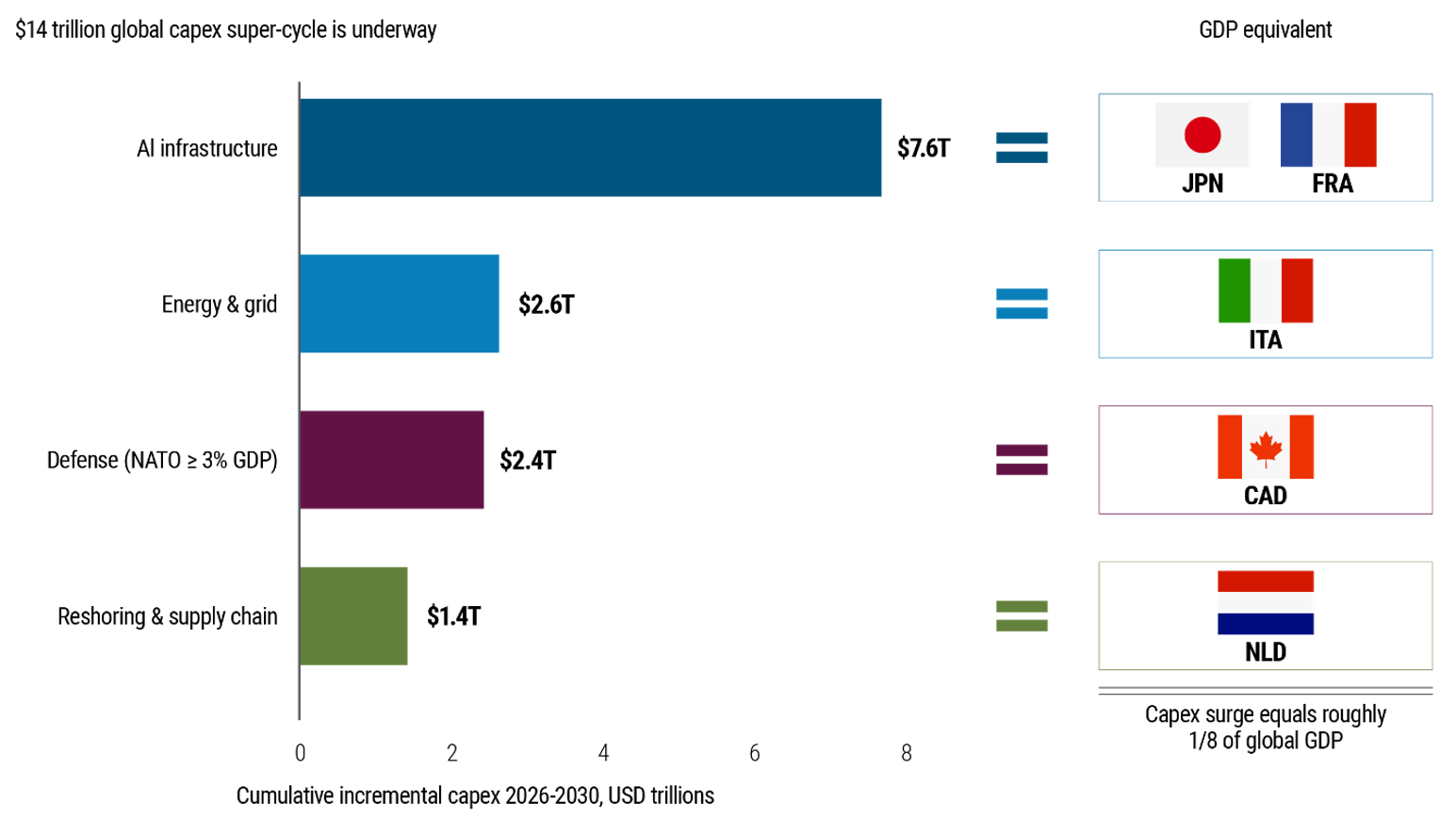
That spending is approximately 1/8th of the entire global GDP. Certainly significant! The buildout of data centers, processing capacity, and power infrastructure is not only reshaping corporate balance sheets, but also is bleeding into multiple sectors, not just technology. As the events in the middle east have once again proven, the chokehold on oil has had ripple effects across the global economy. Geopolitical risk will increasingly play a role in the AI boom, as energy security is now inseparable from its impact on energy-intensive technologies such as AI. We talk often about “what inning” this is for the AI boom. Taking that analogy from a slightly different angle, as this chart and many others highlight, regardless of the inning, we are most certainly in the “spending big money on our roster” portion of this economic cycle. It seems everyone in the league is spending big but determining what “teams” can build the best roster will continue to be our goal.
“This presentation is not an offer or solicitation to buy or sell securities. The information contained in this presentation has been compiled from third party sources and is believed to be reliable, but its accuracy is not guaranteed and should not be relied upon in any way, whatsoever. Fagan portfolio characteristics and holdings are subject to change at any time and are based on a representative portfolio. Holdings and portfolio characteristics of individual client portfolios may differ, sometimes significantly, from those shown. This information does not constitute, and should not be construed as, investment advice or recommendations with respect to the securities listed.
Additional information including management fees and expenses is provided on our Form ADV Part 2. The actual return and value of an account fluctuate and, at any time, the account may be worth more or less than the amount invested. Bond Investments are affected by interest rate changes and the credit-worthiness of the issues held in the portfolio. A rise in interest rates will cause a decrease in the value of fixed income positions. Past performance results are not indicative of future results.”